A New Era in Scientific Automation: The Journey of Tetsuwan Scientific
From Halloween Costumes to Revolutionary Robotics
It was a night like no other when Cristian Ponce, dressed as Indiana Jones, crossed paths with Théo Schäfer at a Halloween party in 2023. Hosted by Entrepreneur First, this gathering was more than just costumes and candy; it was a breeding ground for innovation. Schäfer, an MIT alumnus with a master’s in underwater autonomous robots and a NASA Jet Propulsion Lab veteran, recounted his tales of exploring Jupiter’s moons. “Crazy stuff,” Ponce chuckled. With his own background from Cal Tech in bioengineering, specifically focused on E. coli, the two immediately clicked over shared experiences in the lab.
The Challenge of Lab Work
Ponce often lamented the tedious manual labor involved in genetic engineering—hours spent with a pipette transferring liquids. Despite attempts to automate such tasks, existing solutions were either too specialized or costly and required programming expertise for every experiment tweak. This led them to co-found Tetsuwan Scientific, aiming to transform lower-cost lab robots into versatile assistants.
A Game-Changing Revelation
“We’re witnessing breakneck progress in large language models,” Ponce said about an OpenAI product demo that sparked their innovation.
– Cristian Ponce
In May 2024, while watching OpenAI’s multi-model launch, they found the missing piece. Inspired by how the model interacted with users and showcased scientific reasoning, Ponce tested GPT-4 with an image of a DNA gel. Astonishingly, the model not only interpreted the image but also diagnosed an issue—a primer dimer—and suggested solutions. This “light bulb moment” highlighted the potential of AI in diagnosing scientific outputs but underscored its lack of physical execution capabilities.
Pioneering AI in Scientific Discovery
The journey towards AI-assisted research isn’t new; roots trace back to 1999 with Ross King’s robot “Adam & Eve.” However, true momentum began in 2023 through various academic papers. Tetsuwan’s research revealed a gap—no software could translate scientific intent directly into robotic action. Robots lacked context to comprehend the physical properties of materials they handled.
Tetsuwan’s Breakthrough
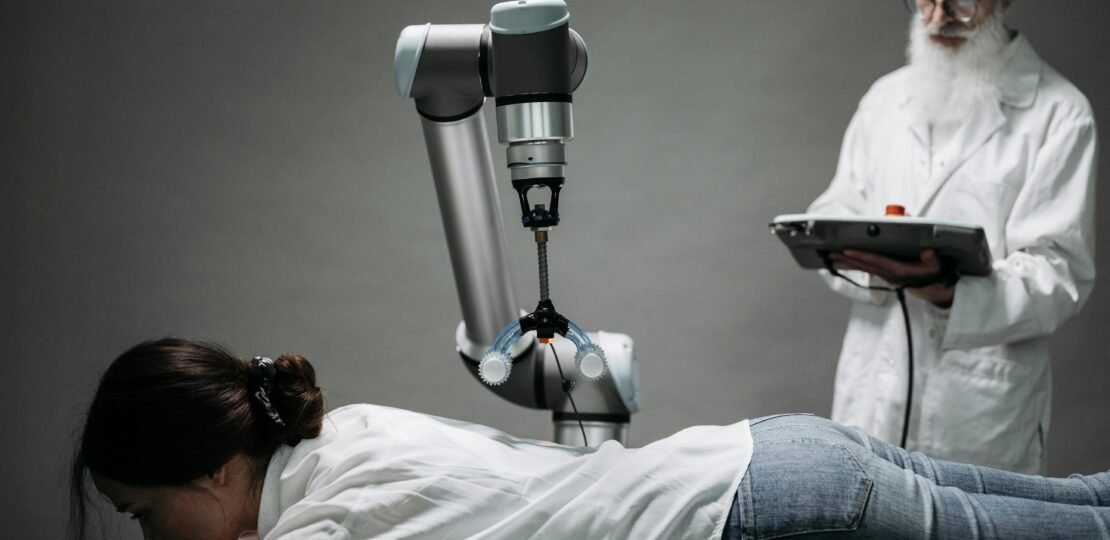
Tetsuwan Scientific developed robots that aren’t humanoid but are equipped to evaluate and adapt autonomously. These square glass structures incorporate software and sensors that enable understanding of calibration and other properties vital for experiments. Currently, they have partnered with La Jolla Labs to enhance RNA therapeutic drug development and have secured $2.7 million in funding from notable investors.
The Future of Independent AI Scientists
Ponce envisions a future where AI scientists fully automate the scientific method from hypothesis to results. “It is the craziest thing that we could possibly work on,” he shares with enthusiasm. This vision aligns with efforts by organizations like FutureHouse and Seattle-based Potato, all working towards a revolutionary era of scientific discovery.